

A Bad Batch of Berries
Prison food is a serious public safety issue


Last week, after I had groceries delivered onto the front doorstep of my warm and furnished house, I huffed around unpacking them in my kitchen—like the hired help had the day off.
The horror of modern life is unending.
I even had to make room in my own oversized stainless steel refrigerator by throwing out perfectly good leftovers.
But that wasn’t the worst part.
What really sent me sailing over the edge was unpacking two pints of fresh blueberries. For three straight weeks, I had endured the discovery of mushy berries from the same store. For whatever reason (stress or hormones or any other facet of being female in the world—the doing all of the grocery stuff) in that moment, on that morning I genuinely felt that I could not take another inconvenience. Not even a minor one.
And wouldn’t you know it—the berries were mushy again. I snapped to indignation and victimhood:
“I am so tired of shitty blueberries.” I said out loud.
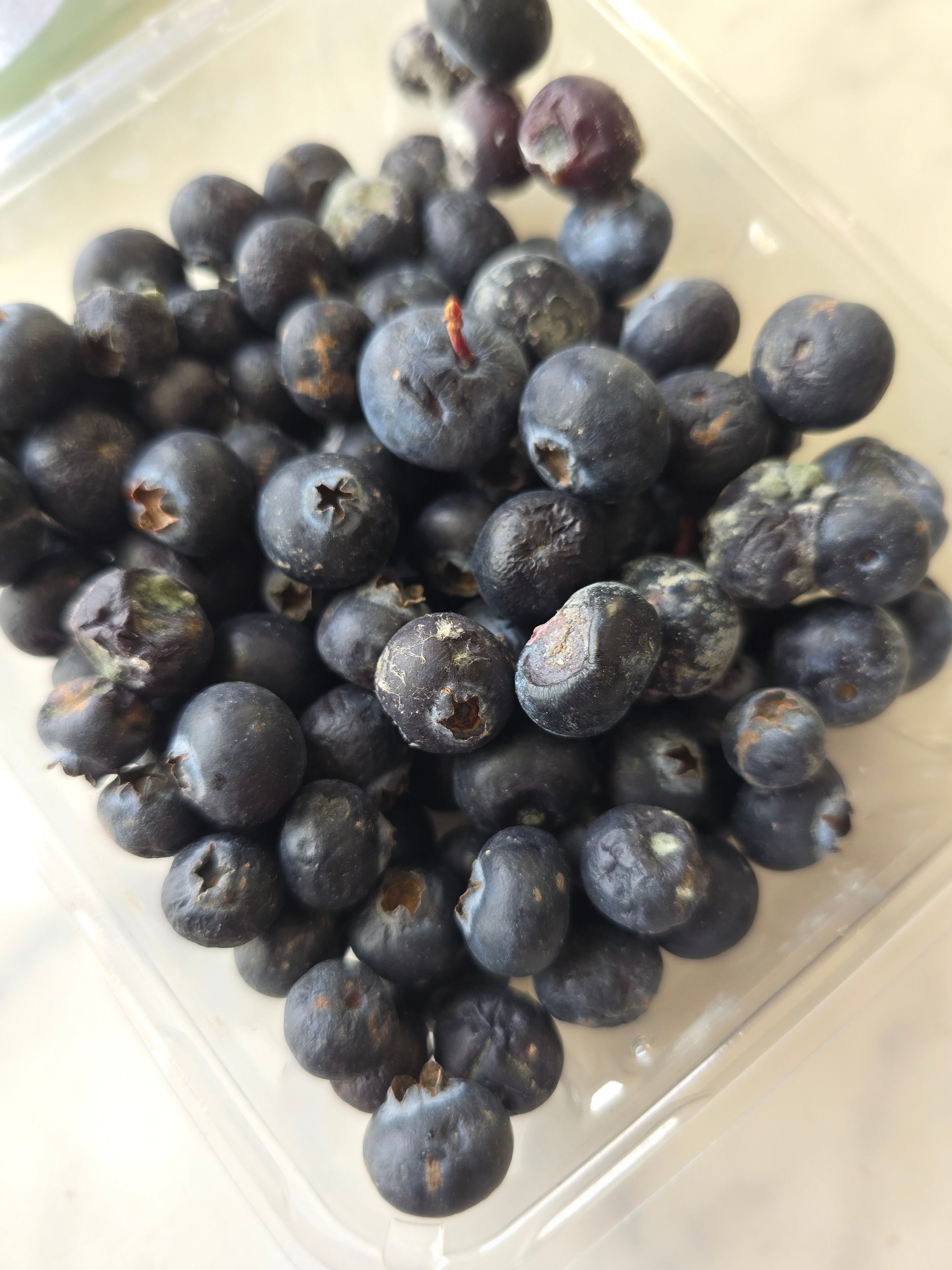
I paused to lock my elbows dramatically, bracing against the edge of the countertop, against my rising irrationality. The incompetence—the laziness—the waste of time and money this was. I started to concoct mean-spirited assumptions about in-store shoppers. I called them names.
And then I looked up. The high windows over my kitchen shown a bright blue expanse of sky. The sun had just started to peek out from behind gray clouds. A moment of clarity struck—
My son has not seen a blueberry in five years.
As I type, he is sitting on his prison bunk eating a soggy “meat” patty and some cold peas sloshing around in gray pea-water.
People ask me what I would change about the prison system—“How would you make it better?” they challenge me. I do keep a long and detailed list in the event that I am ever gifted a magic-wand, but firstly, as a mom (and a health psychologist), there is no other immediate request than this: Change the way we feed our incarcerated citizens.
(Are you there, RFK Jr.? It’s me, Bridget.)
And while this is partially about that whole ‘we are what we eat’ thing—it's much bigger. American prison food is hazardous to us.
To our collective health.
As in, yours and mine, and that of people we love and want to keep safe.
Prison kitchens are a humanitarian crisis, a public healthcare concern, and a public safety issue rolled into one. And it doesn't have to be this way.
Trials
I have taken some time to read the randomized, placebo-controlled studies wherein groups of incarcerated men were given a few basic nutritional supplements (omegas and multi-vitamins). What researchers found in 2002 should have informed national prison food policy ever since:
Violent incidents involving the incarcerated individuals who received said nutritional supplementation dropped by 37% during the experimental trial. That was a whopping 30% drop from the violence still occurring in the placebo group. *Nothing else in the study nor the prison had been altered.
Afterward, the lead scientist on this project made a shocking claim:
“Having a bad diet is now a better predictor of future violence than past violent behavior. Likewise, a diagnosis of psychopathy, generally perceived as being a better predictor than a criminal past, is still miles behind what you can predict just from looking at what a person eats.”
And these findings have since been replicated though mostly in Britain, Australia, and the Netherlands because American scientists can’t be bothered with it. Obviously, there’s no money in that kind of research.
But think about it—if we could guarantee a near 40% drop in a population’s propensity toward violence, why would the public not opt for funding this option? Ninety-five percent of our incarcerated citizens are coming back to a neighborhood near you and me, and they are returning hungry on too many levels.
And OG Moms know.
What our kids eat undoubtedly impacts behavior, not just in the short term. We want our loved ones to be able to listen and learn, to make rapid connections to consequence, to have stable blood sugar and therefore be less impulsive and irritable, for them to be charitable and kind—not scavenging, hoarding, defensive and emaciated wolves.
My incarcerated son has not eaten fresh fruit—has not even seen a blueberry (mushy or otherwise) in five years. The closest he comes to them is in the visiting room where I could buy him a $3.50 Nutri-Grain Cereal Bar from the vending machine.
And I won’t buy those chemically-gelled bars of glycerin, dextrose, sugar, and corn-fiber. That goo does not contain a single berry. Kellogg’s goes on selling their corporate lies to moms like me at a 600% mark-up—and it is still the best nutrition we can get inside.
My son has been medically underweight for three of the past five years. He was put on a soft foods diet by medical staff to increase his caloric intake, which in actuality is just two extra Uncrustables per day. You, taxpayers, are paying the J. M. Smucker Company a salary to keep my son just above starvation.
“Well, prison isn’t meant to be the country club!”
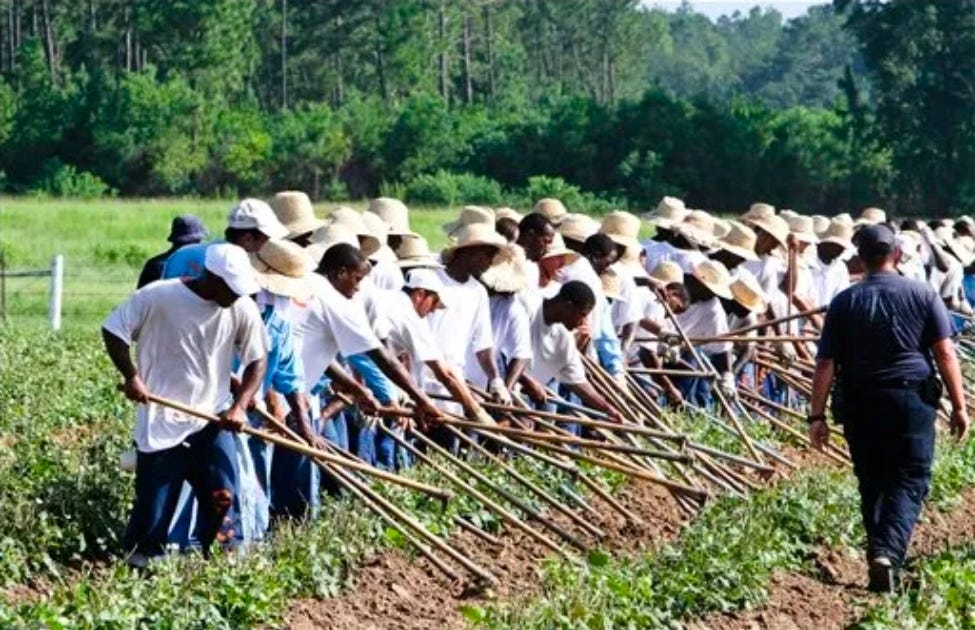
No it isn’t, but correct me if I am wrong—prison isn't meant to make our citizens more violent nor more unpredictable. If we are in the business of creating rabid dogs rather than offering rehabilitation, we should discuss it. Openly. Often.
Please do not like nor share another news reel about the dangers of “another” repeat "offender" unless you are also willing to talk about the failure of the system which turned him back onto the streets.
Prison—as it exists in this country—is systematically manufacturing communities of starving, desperate, feral human beings. Two million people in the Land of Plenty have to barter, beg, rob, and do favors for unsavory people in order to (partially) fill their bellies with non-food, pre-packaged, nutrient-void slop.
Some of our neediest, most vulnerable (mentally and physically ill) citizens reside in our prisons—and we have the nerve to assume they will “get better” with time served in these places of depravity. Decades of evidence proves that this mindset is the real insanity. Same song, second verse, a little bit louder and a whole lot worse.
Think about the last time you missed a meal or even an afternoon coffee, and then tell me in the comments how you show up in meetings, in long lines, or in the face of increased gas prices when hangry—Then imagine yourself being on the edge of actual hunger every day for five, ten, twenty-five years with high levels of violence and loneliness and degradation in your home.
Rehabilitation, by definition, requires that the providers of said rehabilitation address the functional deficits of the individual undergoing transformation. The deal that we taxpayers have made with the State is that they take custody of those in need of reorientation, and we pay them to provide conditions that will encourage optimal growth and change. They are reneging on our deal, and have been for decades. Prison kitchens (and those running them) are complicit in our crime rates.
I wish I could send my son my mushy blueberries this week.
I wish I could pack him a homecooked meal.
I wish he was not having his mental and physical health destroyed in the process of serving his debt to society—because we will all pay for it when he comes home. He’ll be on state aid, with taxpayer-funded health benefits. Sorrynotsorry about the costs we have incurred to make him more functional on the other side.
That should be happening now.
So What Do We Do?
One of the great parts of the Substack community is that I have linked arms with men and women from all over the country who have been justice-impacted in one form or another.
Last year, I ‘met’ Chandler Dugal here—a formerly incarcerated man who is now hard at work in Maine as not only the author of The Daily Prisoner but also as Director of Operations for the National Prison Debate League, a Senior Paralegal, and an aspiring law student.
We have chatted about prison food on several occasions, and I would love for you to hear his take on what is different in Maine prisons now. I am passing the rest of this piece over to him to share what is possible—and his story should give us hope.
From Chandler:
As Bridget has written, and as I’m sure you all probably intuitively knew, prison food f*****g sucks. Well, most prison food sucks.
Let me explain.
I was transferred from a Virginia Department of Corrections facility to Maine DOC custody on March 17, 2021—St. Patrick’s Day. I was jolted awake at 4:00am by the screeching, grinding sound of the metal door to my cell sliding open. The CO told me to pack my things and bring my small sack of personal belongings with me. Soon I was sitting in a holding cell in the medical wing of the facility, holding a paper take-out box full of oatmeal, runny and overly sweetened to mask the stale flavor of the grains which clearly weren’t absorbing as much liquid as they were supposed to. It was basically the same breakfast I’d had every day for the past fifty days.
I ended my day with a different meal, sitting in COVID quarantine at Maine Correctional Center.
That night there was beef stew for dinner. As I opened the lid of the plastic tray, alone in my cell, at first glance the meal didn’t look all that dissimilar from the “goulash” (i.e., slop) I had gotten used to being fed over the past nine months.
Then I looked closer. The onions looked healthy, not desiccated. The carrots were a deep orange, freshly cut rather than produced from a can. It was made with real beef. Good, hearty stew beef, not ground. It was the first time I’d eaten meat in nearly a year that wasn’t low-grade deli slices or amalgamated with soy. It came with a roll and brownie, both baked in-house.
I assumed this holiday meal would prove to be an exception rather than the rule.
The next night we had chicken alfredo over linguini with a side of steamed broccoli. There was more chicken on that one tray than I had eaten in the past month or more. I don’t think I’d had broccoli since I’d left home. I was genuinely stuffed, and satiated, for the first time since I had been inside.
Over the coming days I realized that every single meal contained at least one fresh fruit or vegetable. As I would soon learn, the latter was almost always grown right at the facility. In the county jail in Virginia we had fresh vegetables once a month, in the form of a side salad on “pizza day.” I don’t remember getting fresh produce once during my two months in a Virginia prison. I remember a lot of rice and beans, bread, and that damned oatmeal.
Another realization struck me on my third day in Maine—
The COs are eating this food too. When I was in general population and eating in the chow hall, I watched officers getting meal trays through the serving slot (a narrow slot in the wall so that the server couldn’t see who they were feeding) just like the residents. Same food, same portions; everyone acting like it was normal. I never saw that in Virginia. Those guys wouldn’t have been caught dead eating our food—except maybe on pizza day, but that’s kind of understandable.
A few days into my time in Maine, I started sleeping better. I started feeling better. This food wasn’t hyper-processed, overloaded with sodium, and made by the lowest bidder. It was real food.
Memorial Day brought an honest-to-God cookout tray. Cheeseburger, hotdog, pasta salad, potato salad, lemonade. On Independence Day we were fed steak and ice cream (not the little cups of vanilla you’d get in elementary school either, but Moose Tracks, which is the best flavor and I will die on that hill). The meat was a little tough to cut without a real knife, but I suppose the lack of real cutlery was understandable. I didn’t hear anyone complaining.
On a random Friday that summer, we had salmon. I don’t even really like fish, but you can be damn sure I ate that salmon.
How did Maine DOC manage to do all of this?
They just decided to.
Surely it costs a fortune though, right?
Maine DOC saves money feeding the people under its charge this way.
Where do all the ingredients come from?
We grow it ourselves.
Savings from growing (rather than buying) produce are put back into improving the quality of items that can’t be made in-house, such as proteins and dairy products. MDOC facility kitchens buy many of these products from local farmers (helping the local economy) rather than, say, buying powdered eggs from a massive conglomerate headquartered halfway across the country.
When the agricultural program grows more produce than the residents can eat (which happened every year without fail while I was in custody) the excess is donated to local food pantries.
So just to be clear: we can give prisoners better food, save money, and help feed the hungry in the wider community.
Don’t believe me? See for yourself:
That’s nice and all, but what about punishment?
The punishment was that I didn’t get to decide what time I could wake up, eat, use the toilet, shower, and sleep for three years. The punishment was not being able to see my family, save for one or two hours a week, and being strip-searched after every visit. The punishment was that I missed birthdays, holidays, and my childhood dog dying. And I had it way, way easier than most.
Look, I get it. There’s a part of the human psyche that wants bad things to happen to “bad people.” There’s a straightforward sense of justice to that. But here’s the kicker. It makes people do more bad things when you treat them (and feed them) like animals. And they act better when you treat them (and feed them) like human beings. So, we can either focus on punishing people, and expect that to rehabilitate them despite all evidence to the contrary, or we can start doing things differently.
Maine serves as the example.
Maine’s prison system used to be every bit as Shawshank-y as Stephen King wrote about. And not just back in the day, but as recently as the mid-2010s. I know, because I lived with guys who had been there for decades. The COs weren’t shy to talk about the good/bad (depending on the moral compass of the particular CO) old days, either. Oh, and there’s a documentary about that, too.
It’s different now. And it’s no small coincidence that big changes in behavior immediately followed big changes in how people were being fed. As stated in the Seeds for Change documentary above, in 2016 Maine DOC started a pilot program for organic gardening at Mountain View Correctional Center. Keep that year in mind as you read the following, straight from a panel presentation delivered by MDOC Commissioner Liberty at a major international corrections conference:
“Over a seven-year period 2017-2024, MDOC accomplished a significant reduction in the following categories:
Assaults Resident on Resident: 77 Percent Reduction
Assaults on Staff: 88 Percent Reduction
Resident Self Injurious Behavior: 98 Percent Reduction
Suicidal Behavior: 65 Percent Reduction
Restrictive housing: 84 Percent Reduction (Over ten year period)
(Less than 1% of Residents now in Restrictive Housing)”
Every Maine DOC facility now has an organic gardening program.
Sure, there’s more to all that success than just food. Normalization, massive reduction in the use of solitary confinement, expanded access to work and educational programming, evidence-based practices and revamped staff training all play a role.
The food, in this humble felon’s opinion, undergirds all of that.
Try building a positive, rehabilitative environment wherein everyone gets pissed off three times a day because they’re eating garbage. Now try doing it at a place where everyone is genuinely excited for their next meal, and the men and women who grew, prepared, and cooked it all sit down together to eat it—with the guards.
Maine’s gardening and fresh-food program doesn’t need to be an outlier. Most of our nation’s incarcerated population is housed in rural facilities. The land is there, waiting to be used. The people are there to make use of it, starving to put some meaning in each day. It’s low-hanging fruit (and vegetables). We can make Maine’s program the nationwide standard, and reap the benefits of what we sow.
How do we do it?
Well…
What if we just decided to?
A huge thank you to Chandler for his struggle and his work! Please subscribe to him below.
 | A guest post by
|
What stayed with me most was the shift from morality to physiology. The piece refuses the comforting illusion that degradation rehabilitates people. Hunger changes the nervous system. Isolation changes the nervous system. Repeated humiliation changes the nervous system. The image of someone not seeing a blueberry for five years says more about institutional failure than a thousand policy debates. What makes this essay powerful is that it keeps returning to something painfully simple: if we keep feeding people like they are disposable, we should not be surprised when despair returns to society altered into violence.
Extremely thought-provoking. Food is so important to our mental and physical health, and thus emotional health. There's no reason not to do this in as many prisons as possible. I also think this is a strong argument for why food welfare recipients should be restricted to using government aid to purchase only healthy foods. Let's put our tax dollars to more reformative work in both the prison and welfare sectors.