

Blackbird, Fly
The potential of a dad

I have a blackbird tattoo on my left arm, adjacent my heart.
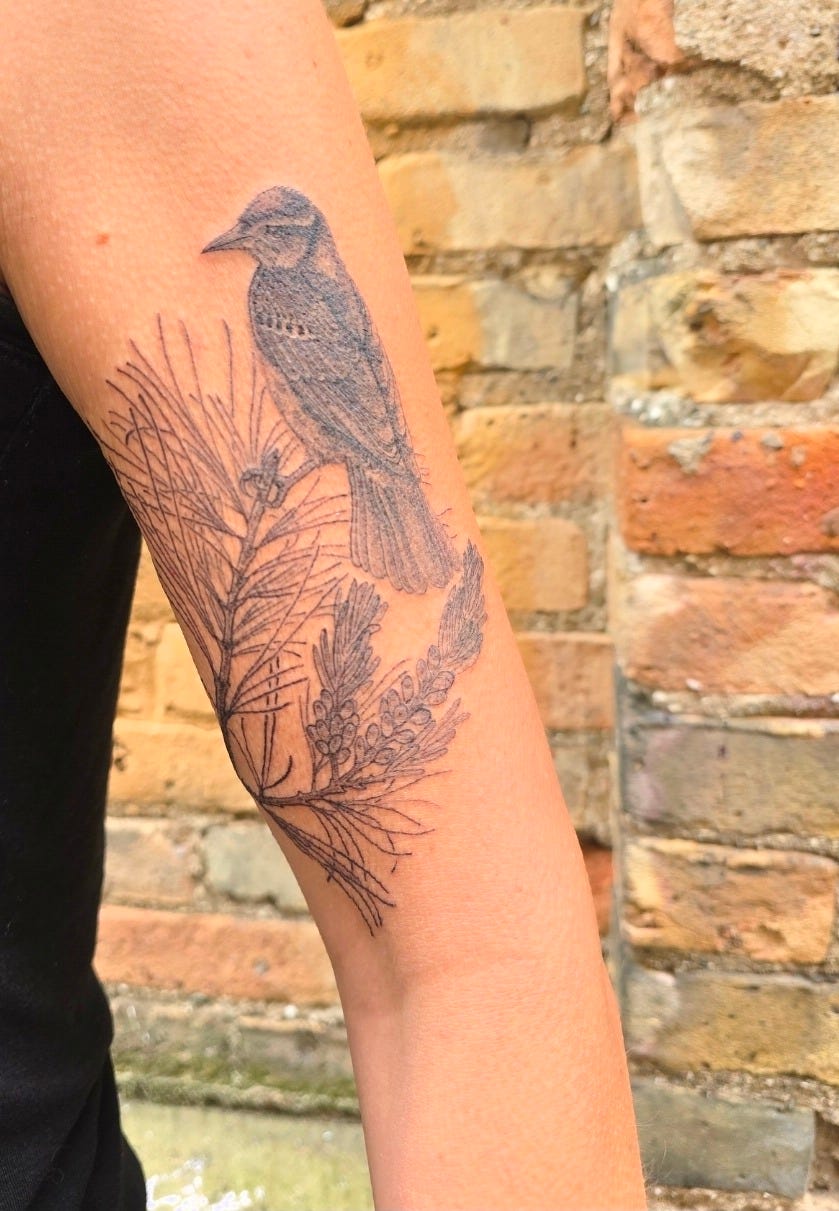
Ask me why.
Or don’t.
I’ll tell you either way.
As far back as I can recall, talking about my dad was a gamble. Some adult in my orbit was likely to sigh or glance over with pity or make a comment about his choices and his loss and what a shame.
I don't remember ever saying the word “daddy,” and buying a Father’s Day card was not a thing we did. Hallmark didn’t offer a version of “I love you, anyway” or “Thanks for the genetics, pops.” I used to fantasize about creating a line of accurate greeting cards for us children of the unavailable, but honestly, who would spend their hard-earned money on them?
Anyway, it’s too late for us.
My dad has been dead for 16 years. All we have now are tattoos, and the stories that go with them.
My mom has told me a few things about my early years with him—dancing to Stevie Wonder, the little me riding shotgun in his old red Dodge truck. I have been told that I once drank a full bottle of Visine while unsupervised in that truck, which landed me under observation in a hospital. It was his Visine, of course.
“You were his little buddy,” mom told me after he died, on the way to his funeral.
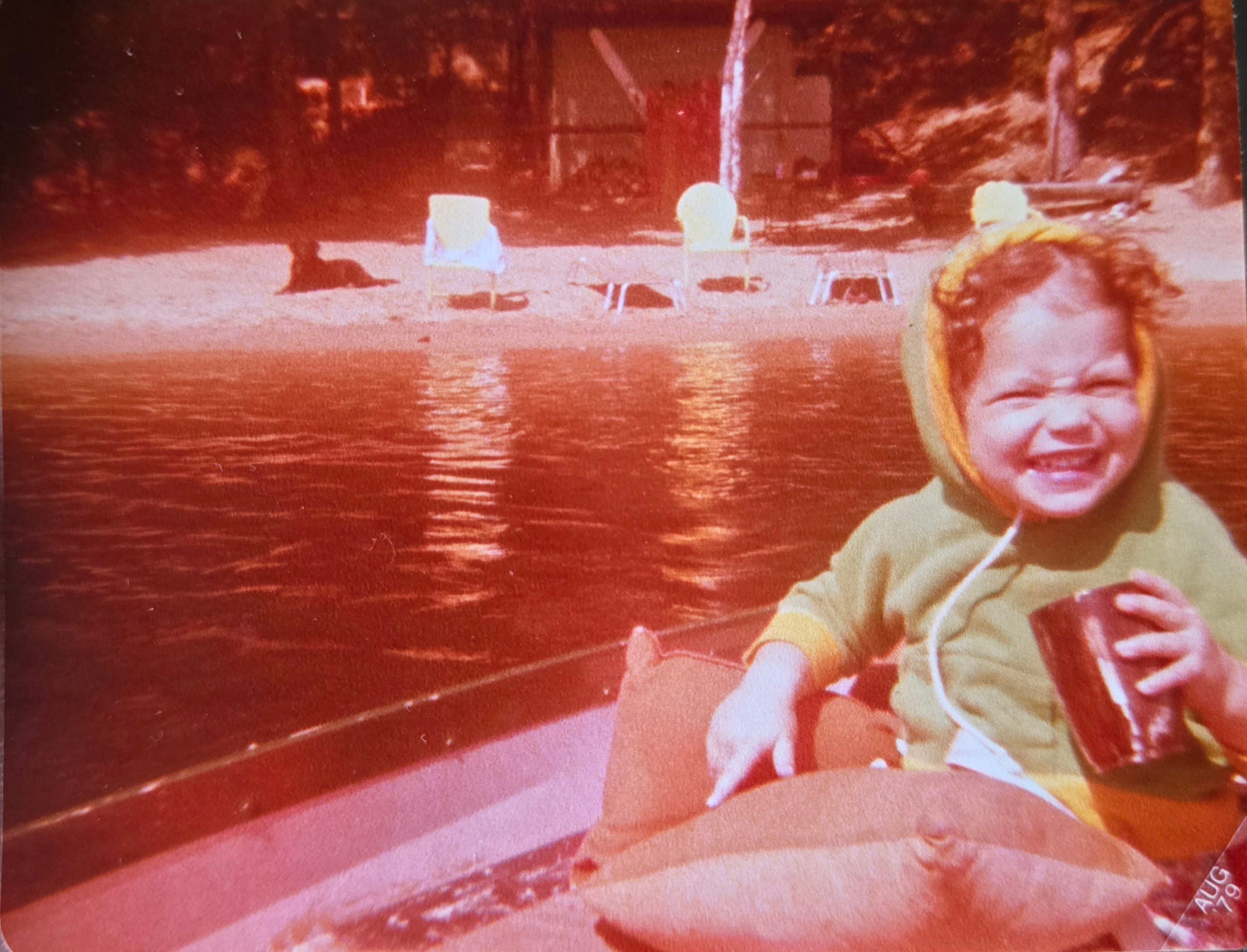
When I was three years old, she packed my brother and me and the entire house while he was at work—and left him to his vices. For the record, I do not blame her for doing so. She had suffered enough.
She didn’t tell him where we had gone for a long time, and when she finally did, he got up one Sunday morning and drove hours to get to our little rented house near Lake Michigan. Upon arrival he found it unoccupied, so he broke in and stole back a painting1 which my mom had relocated to the rental—and then he, in the words of Paul Simon, turned around and headed home again. My parents would fight (and hate each other) over that painting for years. It's even listed in their divorce decree.
Him not staying to see us that day is one of my earliest memories.
My dad fought harder and risked more for that painting than he ever did for me or my brother. We grew up with the understanding that he didn’t want to retrieve us—not at all, and for whatever reasons seemed reason enough to him.
When we were young, we did visit him a few times—always in the summer and always at his dad’s rustic cabin on a small lake in Northern Michigan where his whole family gathered to play.
After that, there was a decade without any visits because of an overdue child support balance. Well, that, and the fact that my mom would call the police if he came within a mile of our next home, the one she had bought as a divorced woman—the home from which we would walk to and from our small elementary school on the edge of a white pine forest.
My dad never came to my elementary school.
At the family cabin, the old painted metal chairs were always in an unbroken circle.
While us kids would throw sticks in the fire and get high on burnt marshmallows and melting chocolate, my dad and uncle would offer the buzzing crowd songs from their youth, including an acoustic version of Blackbird by the Beatles. My dad was famous for his vocal overlay of the bird sounds at the end of that song—so impacting his version, it was played at his funeral.
Blackbird singing in the dead of night.
Take these broken wings and learn to fly.
You were only waiting for this moment to arise.
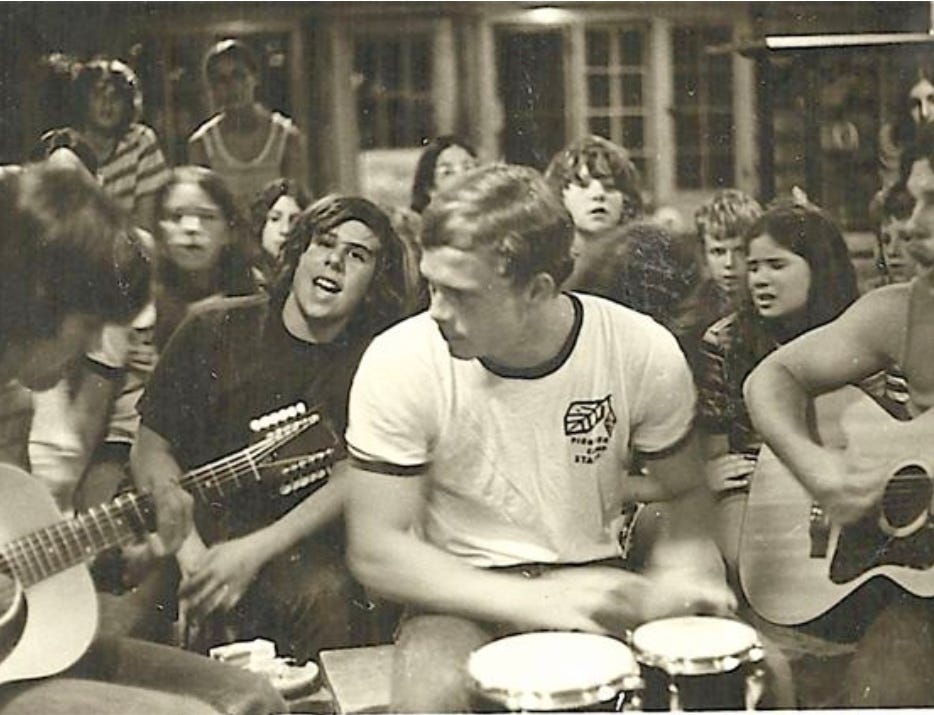
We all wept when the bird ended the song, and he laid there silent and still.
There had always been a version of my dad that I loved. The potential dad. The one who was mine to secretly claim and stow away safely from the hurt of my mom, the disapproval of my grandparents, the pity of my teachers. He remained, for years, the guy who might show up one day, and in that small space—he was magical and strong, and he, in his absence, explained everything that was unexplained in me.
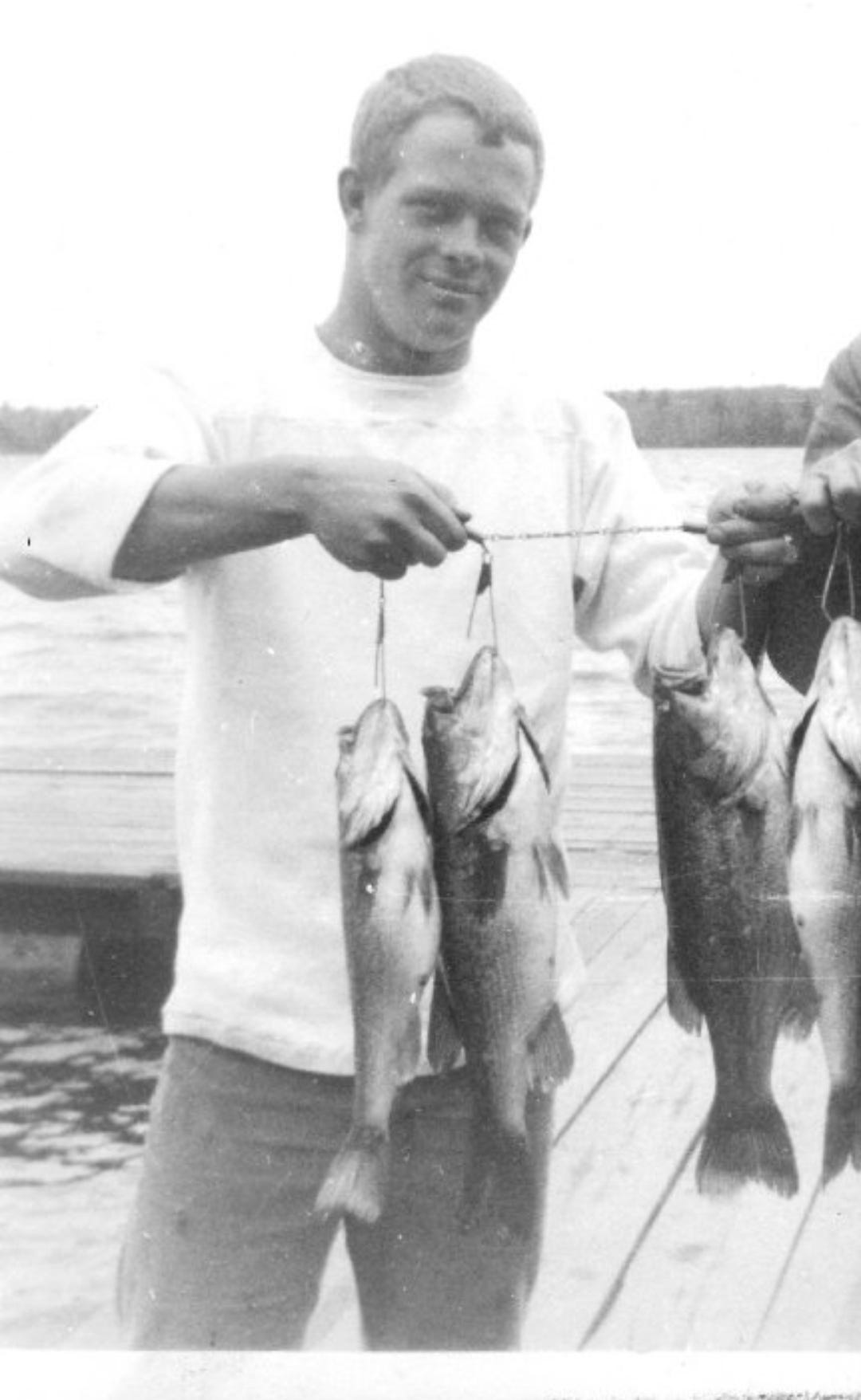
My dad could filet a fish in three swift cuts with an heirloom knife. I would tiptoe to the boathouse to watch him clean the day's haul, and every time I opened that screened door he would point the knife down at my bare feet and, cigarette between his lips, warn me to watch out for stray fish hooks on the cement floor—once set, those hooks are difficult and painful to get out.
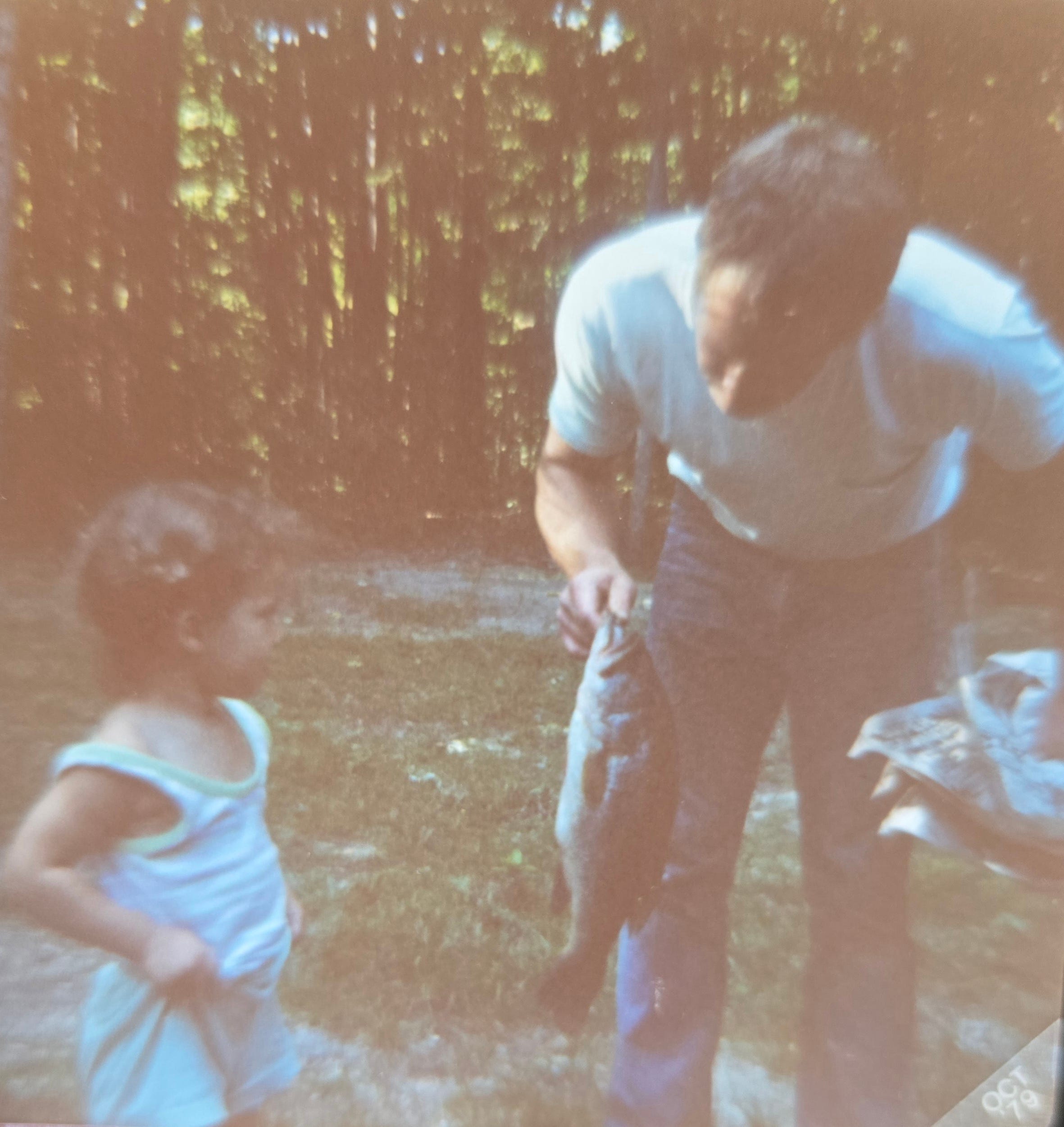
Ask him how he knew.
Or don’t.
I’ll tell you either way.
I watched one time as he worked tirelessly to wriggle a hook from the gills of a small fish out in the little metal boat. He was sweating and swearing, his bronze back glistening in the sun. There were buckets and nets. In the white top cooler, there were beer cans for him and Pepsi for me and my brother.
I remember feeling sad for the fish trapped in crescent shapes inside those buckets, even if everyone cheered when I pulled one in. I wondered what he might do if I tipped them overboard, back to their home, but I didn't dare. No one else seemed sad, so I learned to act like I wasn’t either—like the whole trapped fish thing was just part of life.
He had asked me to find the needle-nose pliers in the tacklebox to help him out, and I was proud I knew what needle-nose pliers were. I hurried my best and handed them to him but after many more minutes of trying, the fish was still not free.
“God damn it,” he said—
We were not allowed to drink Pepsi at home, and we were definitely not allowed to say God damn it. We were not allowed to say any swear words in front of our mom, lest we wanted Tabasco sauce on our tongues.
One time my brother, no more than eight years old, called me a bastard in frustration over some thing we were fighting about. He was quickly whisked into the kitchen by his upper arm where he was forced to stand in front of the refrigerator with that red sauce coating the center of his extended tongue, his head tilted toward the sky. I felt guilty.
“Do you even know what a bastard is?” My mom demanded to know. She looked in my direction. No, I shook my head, but I knew it was bad.
After she explained, I pointed out the irony of the Tabasco sauce since we were actually real-life bastards.
“That’s enough out of you.” She said.
Taking the Lord’s name in vain might not be fatal if you are trying to save one of his precious creature’s lives, say a fish on a hook—maybe it's a prayer, I think. God damn the hurting of this innocent living thing. God damn all of the hurt on Earth.
And so it went.
Most of my childhood was spent trying to excuse my dad for not keeping any of the Lord’s commandments. He didn’t go to church, I knew that, but it didn’t stop me from wanting to save him, from asking God to save him. When the pastor asked us to close our eyes and raise our hands if we had a prayer request, mine was always something about my dad. Maybe God could help him stop smoking cigarettes or drinking so much.
I once wrote him a letter to tell him that I was praying for him and I was bold enough in it to ask him to quit smoking because, I added, it was bad for him and I did not want him to die. Even then I knew that if he lived long enough, I would become an adult and then I could meet him on my own terms where my mom wouldn’t be hurt by my desire to know him better. I enclosed a picture I had drawn of us playing together in a colorful Crayola world.
He died at 56 anyway.
Me and God were never able to make him do anything.
The fall after the beach bonfires and the God damn it fish, I went back to school and bragged about my dad. I made up stories about how he was a famous musician and about how he could barefoot water ski. In fairness, those weren’t complete lies. He could barefoot water ski—I just never saw it—and his band had won Battle of the Bands in Detroit in like 1970.
In my late teens, the smell of beer on a man’s breath was oddly attractive, and a waft of cigarette smoke connected me to something I wanted—something wild in me.
Many times, I had watched my dad’s ash grow grey and long on unattended cigarettes. I had admired the Marlboro moving up and down in his lips while he fileted the fish. He would smoke while playing bongos or steering the boat, squinting one eye all cool like James Dean or Paul Newman. The click of that lighter, his head-cocked just so—the first, long drag.
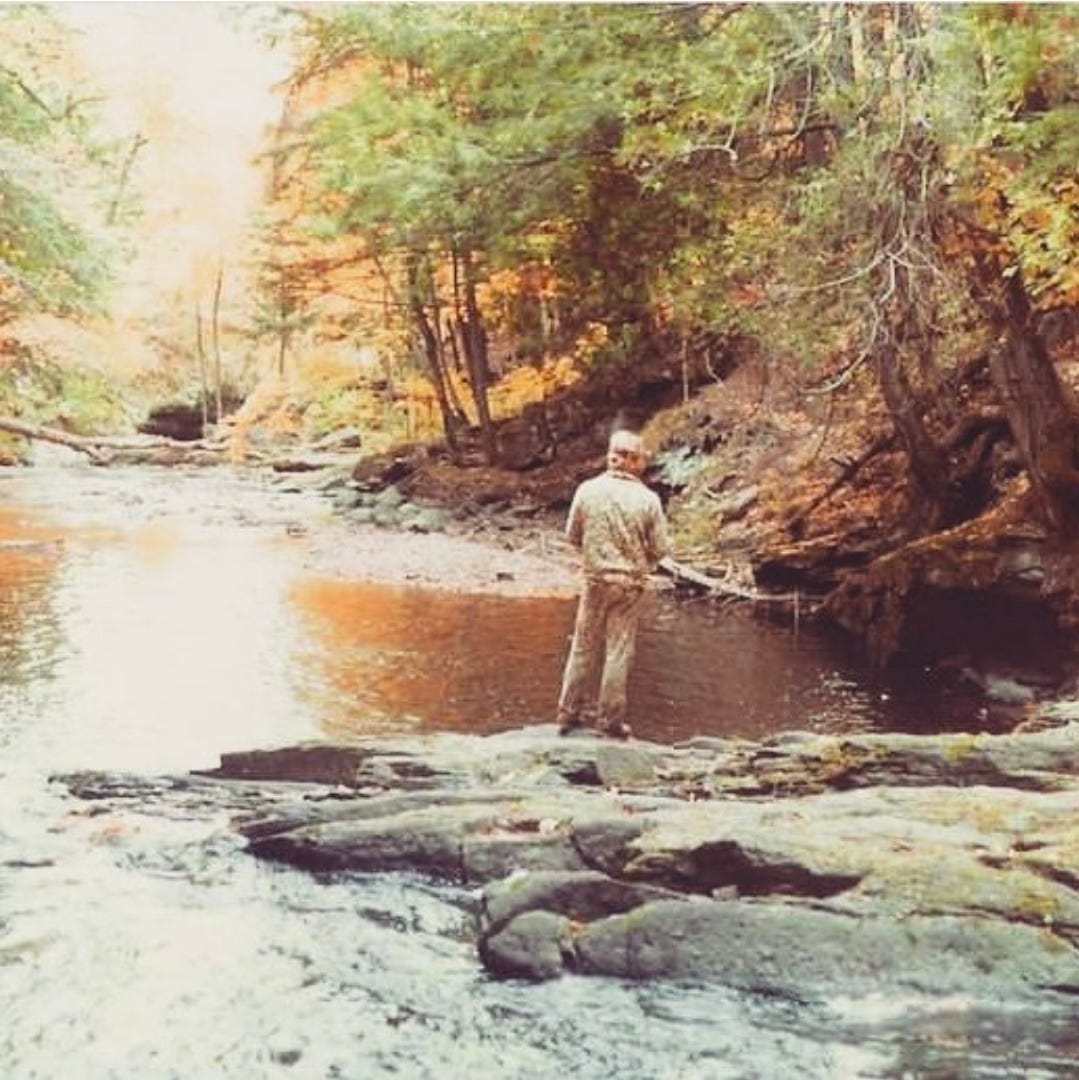
Until today, I have been unable to understand my weird, life-long obsession with Ernest Hemingway—why I have always navigated toward his gritty, staccato prose—why I have paid too many times to tour his archived home in Key West. My dad and Hemingway might as well have been brothers, and well, that ruins them both a bit for me now.
If they had let my dad leave the hospital after his surgery, I’ve no doubt he would have unloaded a shotgun shell into his chin too, rather than live with a colostomy bag for the rest of his life. He didn’t make it home, in spite of his snarky comments about wanting to do so. He died in the ICU—after I signed the paperwork to pull the plug, but not before I crawled up into the hospital bed next to him. It was there that I made the only memory I have of snuggling with my dad. He was unconscious by then, so I’m not sure if he heard me whisper,
“You can go, dad, it’s okay.”
Blackbird, fly.
I kept pushing the morphine button for him, and I tried to let him go—knowing full well that I had never really had him anyway.
Ask my children how they know.
Or don’t.
They can probably tell you.
Since publication, my mom has informed me that he in fact stole several paintings as well as the tv and the stereo.
Bridget. This is one of the most honest, achingly beautiful pieces of writing I’ve read in a very long time. You have done something so few writers can do — you’ve held the love and the wound in the same hand, refused to flatten either one, and let the reader feel the full geometry of what it means to be a child of an unavailable father. The potential dad. The one you secretly claimed. The one who “in his absence explained everything that was unexplained in me.” That line will live in me for a long time.
What strikes me most is the absence of contempt. You have every right to it — and you do not reach for it. You let your father be exactly what he was… a man who fought harder for a painting than for his children, who could filet a fish in three swift cuts, who left a piece of himself in your obsession with Hemingway and in the smell of beer that once felt like home. That kind of writing — the kind that refuses to make a villain or a saint out of a complicated man — is some of the most important work being done anywhere right now. It is the work that lets the rest of us breathe.
The families we walk alongside at know this terrain. So many of the children we serve are building their own potential dad in the silence — the one stowed safely away from a mother’s hurt, a grandparent’s disapproval, a teacher’s pity. The one who might show up one day. The one whose absence is doing the explaining. Your piece is a gift to every one of them, and to every adult who is still carrying the child who waited.
You climbed into that hospital bed. You whispered him free. You pushed the morphine button. That is love in its most demanding form — the kind that asks nothing of the beloved in return, that simply releases. Blackbird, fly. Incredible.
Thank you for this. For all of those still learning how to grieve the fathers they never quite had.
Dads and Daughter...such a complicated relationship...it's a love/hate push/pull creation. Yours was a beautiful description...it makes me want to put mine down on paper as well. Thank you for sharing.