

Locked In a Bathroom
Our Holiday Tradition

“I am persuaded that those who designed this system of Prison Discipline… do not comprehend its full extent and do not know what it is that they are doing.”

-Charles Dickens
In 1982, I got trapped inside of the small bathroom at the back of our first-grade classroom. After closing the door, a large metal radiator cover sheared off the wall and wedged itself against my exit— a solid-core, oak door that opened inwardly.
As I type this (forty-three years later), I’ve no idea how they got me out. The only thing I recall is laying on my belly with my face pressed against cold tile, the janitor's boots inches from my face on the other side of the door. Beyond that, I could see only a small sliver of inverted activity in the distance as my peers went on with their school day.
About 600 miles from my elementary school and less than a year later, two corrections officers were killed in separate incidents at a prison called USP Marion. The facility was placed in lockdown to gain order— but this time would be different.
That lockdown was never lifted.
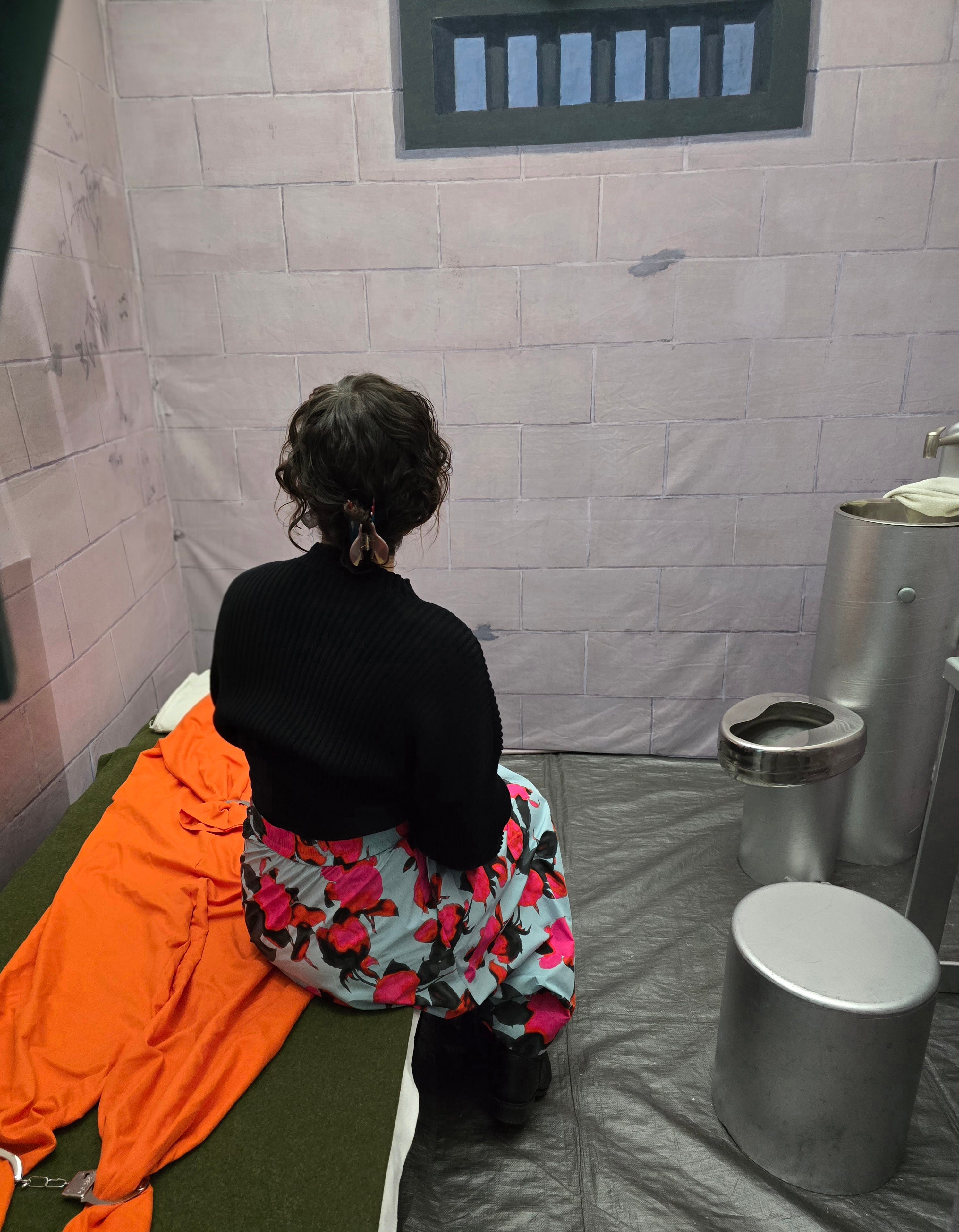
Overnight, this model of control became the exciting new blueprint for American incarceration. Prison staffing ballooned to keep the entire facility inside of their cells 23+ hours a day. They closed the mess hall and began feeding people through bars. All religious and library services were stopped. Inmate movement in the buildings occurred henceforth in shackles and leg irons, with three escorts. Restriction to this scale had not been done before— not even at Alcatraz— and it was done without public notice or consent. A whole facility of people, trapped inside of their bathrooms, indefinitely.
The supermax era had begun.
‘I dare everyone to lock themselves in their bathroom for one weekend,’ wrote Brian Nelson, a formerly incarcerated man from Illinois who spent 12 years in solitary confinement. Imprisoned at 16 years old, he admitted that he never evolved into a socially-functioning adult. ‘I’ve never even spent the night with a woman,’ he admitted (at 48 years old). He died alone in 2021.1
I found his essay in a compilation of solitary confessionals called Hell Is a Very Small Place. It took me months to get through it because you don't read about solitary confinement in cozy coffee shops nor on a park bench in the fresh air. No, you can't be that callous.
Where does one go to witness human torture properly? Because this book is a full-on glance into hell: the weaponization of feces— shit being flung from hands and wet socks and repurposed milk cartons; bare feet in overflowed toilet water. Humans shaking violently beneath a thin blanket inside a box of frost-coated cinderblock. Tales of unrelenting screaming and banging behind solid steel doors; grown men calling out for their moms.
About halfway through the book, I had to stop reading when my own son was cuffed up and taken to a solitary cell.
I knew something was off after seven days of not hearing from him but when this happens (and it has happened more than a few times), I work to keep myself calm: he must be busy, maybe he is being moved— but deep down, I sense the glitches in the matrix. Having a child in prison has made me a seer of sorts. I have become a bent and gnarly old woman feeling the darkness emanating from a place deep in the woods where they keep him. After ignoring my instincts for a week, I called the prison for a welfare check.
‘He’s in the hole.’ said the man.
‘What happened?’ I asked.
‘No idea, ma’am.’
‘Okay, well hopefully he’s alright.’ I said, wishing he cared.
He told me to have a nice day and hung up, and just between you and me, that's never going to be a nice day. No matter how many times you learn your kid is in isolation, it will never not take your breath and dam your thoughts. You get sucked violently into a vacuum of helplessness— no way to reach them, no explanation, and nothing to be done but pray to a God you're certain has by now turned away.
‘I’m with you,’ I whispered as I set my phone down. ‘Always.’
A few days later, I opened my mailbox to find an envelope with my name and address in familiar handwriting. Inside he had tucked a piece of paper ripped from a letter I had sent him long ago. He had circled the words, ‘I love you’ and below them he wrote ‘Remember this.’ Another time he sent a letter written on the back of a bright yellow copy of the misconduct ticket that sent him into isolation. ‘Long story short…’ it began. He signed off with, ‘Don't worry. I’m hanging in there.’
Hanging in there.
I picture him in a cell with no window, no fresh air, no human contact except for with a gloved hand holding a food tray three times a day. I picture someone ‘hanging in’ in a place like that and then I fight the thoughts of people being found, literally, hanging in there.
Fifty-three percent of all prison suicides take place inside solitary cells.2 When the only human contact a person feels for weeks is the cuffing of their wrists through the metal slot in their door— what else would we expect?
God, let him know he is loved.
My son has lived over 750 days of his one precious life in single cell confinement. I don't really want to talk about it, but I must.
People always want to know why.
Even strangers on Substack ask, ‘what did he do?’ when I mention solitary. I don’t blame people for their curiosity, nor for their assumptions— I used to picture Anthony Hopkins too. Like everyone, I assumed people in solitary confinement must have ‘earned’ it.
The first time my son went into solitary, it was because a cellmate tested positive for Covid. That turned into six weeks of utter isolation through the holidays. He was put in solitary again when another cellmate hit him in the head with a chair while he was reading. He did another few weeks in segregation when a guard was being investigated for misconduct. This most recent isolation happened when his cellmate threw an ‘incendiary device’ under their shared bunks. They both got cuffed and moved into solitary for a few days pending ‘investigation.’ Though far from perfect, I can tell you this: my son has never— not once— attacked anyone nor tested positive for illicit drugs nor had a weapon of any kind.
The truth is, a person can be placed in the hole for utter absurdity: walking too slowly, possessing extra socks, not eating their food. I read about one man who did years in solitary over a piece of indigenous art he had drawn and hung in his cell (prison officials deemed it gang-related). Another man went into seg for the rap lyrics he’d written. Being gay, helping another inmate, not getting out of bed, feeling suicidal— all reasons you can be locked away deeper inside of a prison you’re already in.
And, in spite of the curiosity, no one really cares about the why. After I tell people the list of reasons why my son has been put in isolation, they say things like ‘That's awful’ and ‘That's crazy’ and then go about their day. It seems there's nothing we can do.
Our belief that people should be isolated when they’ve been “bad” is so deeply ingrained that, by the time someone reaches prison, we accept torture as a reasonable solution. Worst than that, we believe it is justified. We Americans are so stuck inside a retaliation mindset that we cannot see we’re gouging out our own eyeballs: Solitary confinement doubles the taxpayer cost of incarceration3 and exponentially increases mental illness4 in people who will one day be back walking the streets of our neighborhoods.5
Social exclusion is psychologically devastating, full stop.
During my first year working in mental health, I met a boy they called a “car seat baby.” Then a five-year-old, he had been raised from birth by an elderly grandmother who had confined him to a car seat all day, every day, smacking his face every time he cried. He was eventually removed to foster care, but it was too late. His brain had hardwired to fear his own vocal tones and he never learned to form words— that boy had been made skittish as a coyote, only able to communicate through guttural utterances and pointing.
That is what punishment in isolation does to the human brain.
It destroys attachment, it reorders neurons, and it severely damages cognitive and social capacities. From Romanian orphanages to academic monkey trials to the mountains of data on returning POWs, isolation disorders have been demonstrated on repeat for decades of psychological study. No one argues that forced social deprivation is beneficial to human beings, except the Department of Corrections.
Even modern zoology practice is grounded in welfare science. By law, custodians of any animal must provide natural habitats, environmental enrichment, and pro-social housing for the beings in their care.6 These standards are enforced by unannounced, on-site visits by independent inspectors.
None of this is true for humans in cages.
Despite the 2016 U.N. ban on solitary confinement beyond 15 days, the World Health Organization’s condemnation of it on medical-ethics grounds, and the Geneva Convention’s 75-year-old declaration that such isolation is torture even for wartime enemies— we’re still at it.
Worse still, in most U.S. States no one is policing the practice. No one can arrive unannounced to check on my son this morning. Not even legislators can enter a prison without making an advanced appointment. We have no idea what's actually going on inside of solitary wings unless we read torturous books and heavy blog posts or watch sad documentaries for the truth.
And while I’m sorry to be a bummer in your inbox this week, the truth is that solitary has become a holiday tradition for our family. Like many years before this one, my son is on cell restriction again this week for ‘getting caught in his door’ which is exactly what it sounds like— his cell door closed on him during a lock-in period and triggered a stoppage at the control panel. That is a violation of D.O.C. rules and so he spent Thanksgiving in time-out on his bunk and I once again spent the week fighting my internal Scrooge. While my other kids and husband watched a football game, I sat there doing the math— Did you know that we keep more people every day in solitary confinement than can fit inside an NFL stadium? Not even the Big House in Ann Arbor could hold them all. There are over 122,000 people in solitary cells right now.
Happy Holidays, everyone!
‘Loneliness is the destroyer of humanity,’ wrote solitary essayist Jesse Wilson. He was imprisoned at age 17 for grand larceny and remains in isolation inside of a supermax today. Jesse is now 42 years old. And he wonders why we bother with him at all:
‘I refuse to embrace the solitude. This is not normal. I’m not a monster and do not deserve to live in a concrete box. I am a man who has made mistakes, true. But I do not deserve to spend the rest of my life locked in a cage–what purpose does that serve? Why even waste the money to feed me? If I’m a monster who must live alone in a cage why not just kill me?
Our country has thousands of its people confined to concrete cages. Years pass, lives pass. The suffering does not. Our families suffer most, watching us grow old and go crazy in a cage. This is my biggest pain knowing my mother and sister suffer with me. I can not see how this is helpful to society. Most men will spend years in a cage alone and be released back into society filled with hate and rage. It is an ugly truth. We as a country are blind to the reality of our prison system.’7
Friends, we don't have to be.
Someday, maybe yet in my lifetime, we will see solitary confinement fall out of vogue in ‘corrections.’ Maybe we will admit that we have gotten it wrong for the last 42 years. I’m not sure what it will take, but I know that you and I are part of the solutions. Check out more resources on this topic below, and bless you for continuing to walk along side us in the reality of this season.
Last Days of Solitary documentary
Unlock The Box Campaign
Write to a solitary pen-pal HERE
Do you work in mental health? Start HERE
Begin a Lifelines to Solitary outreach with your own group!
Sign an online Petition
Keep sharing our story or subscribe today!
P.S.— Happy Black Sheep Friday. We’re not shopping today but we are supporting good causes! Did you know that you can gift Black Sheep Mom? A unique gift for the book club peeps and fellow rebels in your life (or maybe one for you), yearly subscriptions on sale this week only. Ends tomorrow night…
https://www.npr.org/2015/06/11/413208055/from-solitary-to-the-streets-released-inmates-get-little-help
https://nicic.gov/resources/topics/suicide-in-corrections
https://solitarywatch.org/wp-content/uploads/2025/11/SW-Fact-Sheet-11-High-Cost-of-Solitary-v20251103.pdf
https://www.nami.org/advocate/how-solitary-confinement-contributes-to-the-mental-health-crisis/
https://federalcriminaldefenseattorney.com/tom-clements-death-prison-officials-acknowledge-chiefs-death-html/
https://uscode.house.gov/view.xhtml?path=/prelim@title7/chapter54&edition=prelim
https://solitarywatch.org/2012/07/07/voices-from-solitary-loneliness-is-a-destroyer-of-humanity/
I think solitary increases profitability by reducing management costs. I recently learned that for-profit prisons are not required to keep statistics regarding prison conditions and they do not have to respond to Freedom Of Information Act (FOIA) requests. This has been in the news lately as journalists try to report the immigration story. The incarceration of “immigrants” is revealing the lack of transparency in the prison system. I think prison records should be public records, even if the prison is a private for-profit enterprise. The public should have real time access to prison management statistics.
I am finally reading this. My heart sank and I felt like you were in my head when you explained the vacuum feeling! I can relate to much of what you wrote and how these moments your son has spent in solitary has made you feel. I'm right there with you, sending you strength and a big mama bear hug! Hearing about my son last month spending 9 hrs on a bathroom floor in a medical gown, asking for help (medical observation) because he felt he was going to "loose" it... sitting and waiting for a meal to be brought, only to be told we can't feed you anything while your sitting there on the bathroom floor. Making no temporary accommodations for him to eat breakfast and lunch else where, while he "waits" for a medical observation room to become available on a cold bathroom shower floor. He requested a psa - another inmate whose job is to be with someone who requests it while having mental health crisis. No one ever came. He had a psych visit him, speaking thru thr crack of the door, with all the inmates from gp in the hole, surrounding him, who could hear every word the psych said, including his name and why he was there, what meds he was on. Think violation of HIPPA laws?! Hmmm. File a grievance?! It will never get action. It is beyond disgusting, exhausting and draining to hear and see what our sons endure, feeling helpless - to a point. Until us mama bears decide to attempt to help... yet most times get no where. Again, my heart goes out to you and your son. Thanks again for sharing!